Keeping construction sites warm, dry, and under control throughout every project phase. Arctic Warm provides autonomous temporary construction heating and climate control that keeps site conditions stable and predictable from start to finish, eliminating the entropy, delays, and the need to react to conditions that were “fine yesterday”.
Construction sites are constantly changing. Structures close in, spaces shrink, schedules shift, and weather does what it always does. In an engineering sense, a construction site is a high-variable environment that traditional hardware cannot handle.
Traditional temporary heating solutions struggle with this reality. Fixed-capacity oil heaters, manual adjustments, fuel logistics, and constant supervision add risk exactly when conditions should be controlled.
In practice, this often means that conditions are adjusted after something goes wrong, not before. We call this reactive engineering, and it’s a waste of resources.
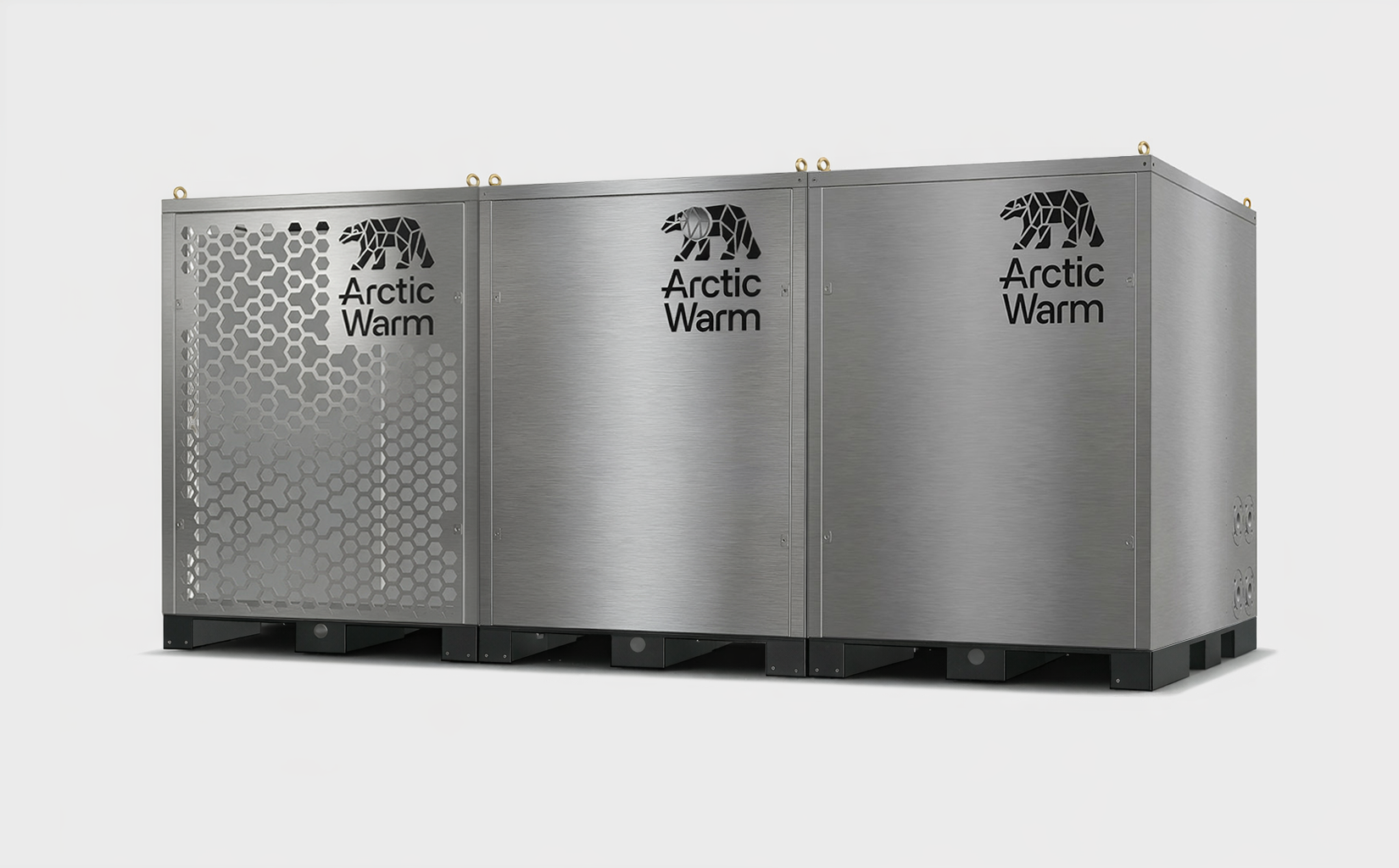
Arctic Warm was built on construction sites where these challenges were experienced firsthand. The solution is simple: temporary site conditions should be managed as a unified system, not as a collection of separate machines.
Managing site conditions with individual heaters usually means managing individual problems as well.
Our modular stack adapts as the site evolves:
On many sites, the biggest risk isn’t lack of heating capacity. It’s the uncertainty around whether everything is actually running when nobody is watching.
In practice, Arctic Warm systems have delivered operational reliability above 99% across active construction sites, including changing phases and harsh winter conditions.
Arctic Warm delivers Aurora Block, a modular hybrid system designed specifically for demanding and temporary environments. If it works in construction, it work anywhere.
Instead of fixed-capacity equipment, the system automatically:
One site manager described spending Christmas dinner without worrying about the site for the first time in years. When a power outage occurred, the backup unit took over automatically and heating continued without interruption.
When the site grows, capacity grows with it. Our hardware is just a vessel for the intelligence inside. In practice, this means fewer surprises, fewer risks, and fewer phone calls outside working hours.
The graph shows how Aurora Block adapts to challenging site heating conditions, such as a power outage or a sudden drop in outdoor temperature. In this example, the total system capacity is 296 kW.
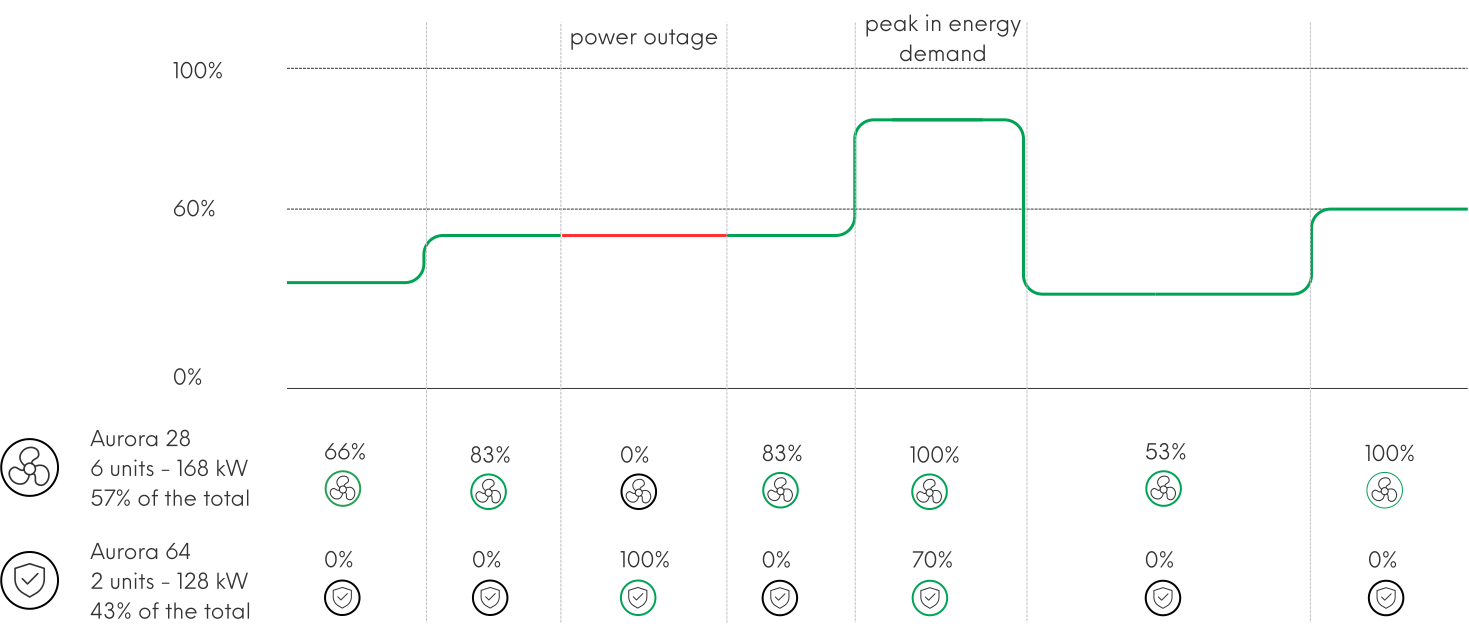
Each Aurora Block module operates independently, but when connected, they form a centrally managed energy grid. The system automatically balances loads, intelligently prioritizes energy sources, and continuously optimizes performance.
This enables an immediate response to events like temperature drops or power outages without manual intervention. While traditional equipment requires constant adjustment and reaction, this system solves the problem before you even know it exists.
In active deployments, Aurora Block has achieved over 99% reliability, even in extreme conditions and during power outages.
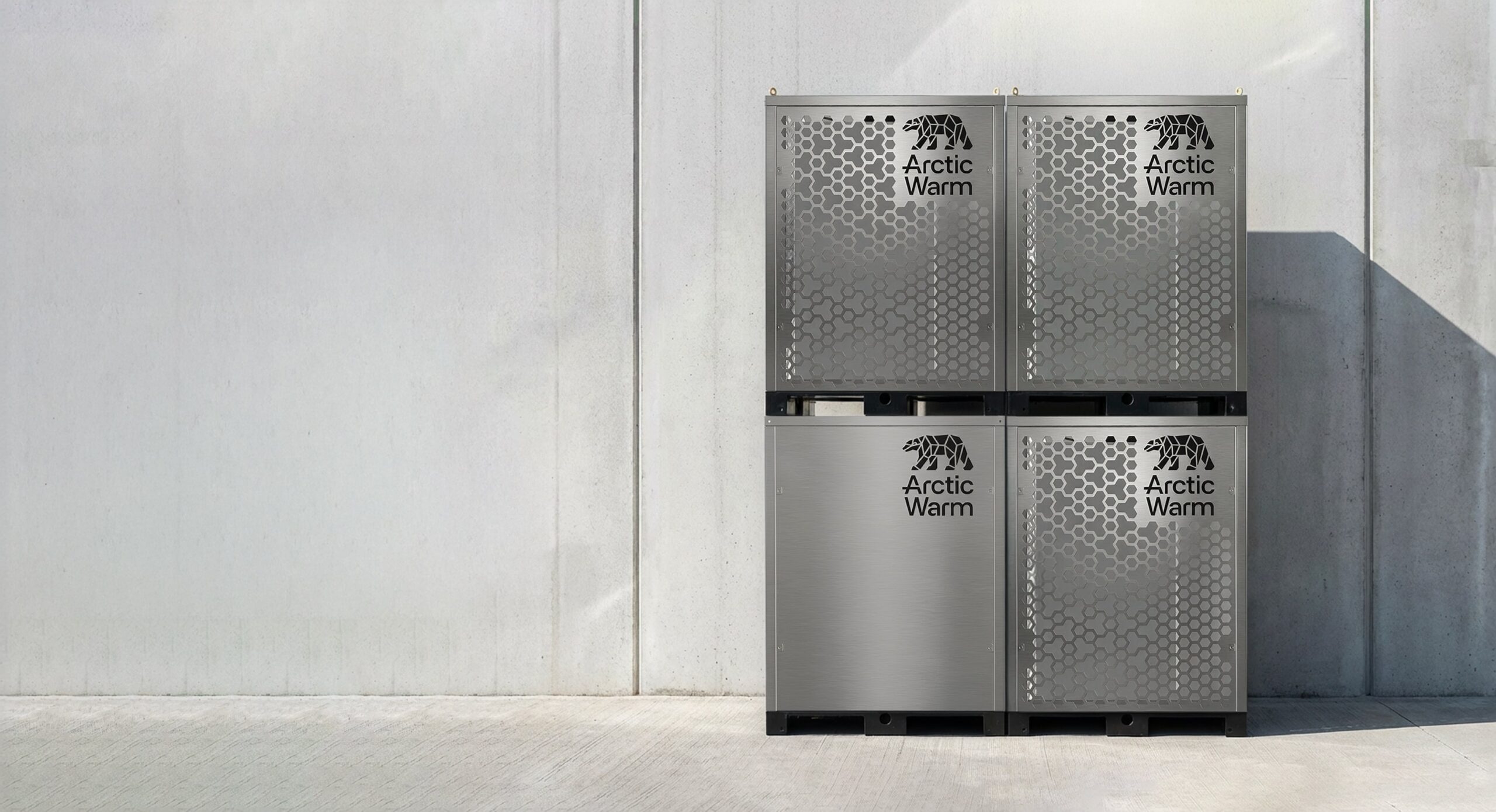
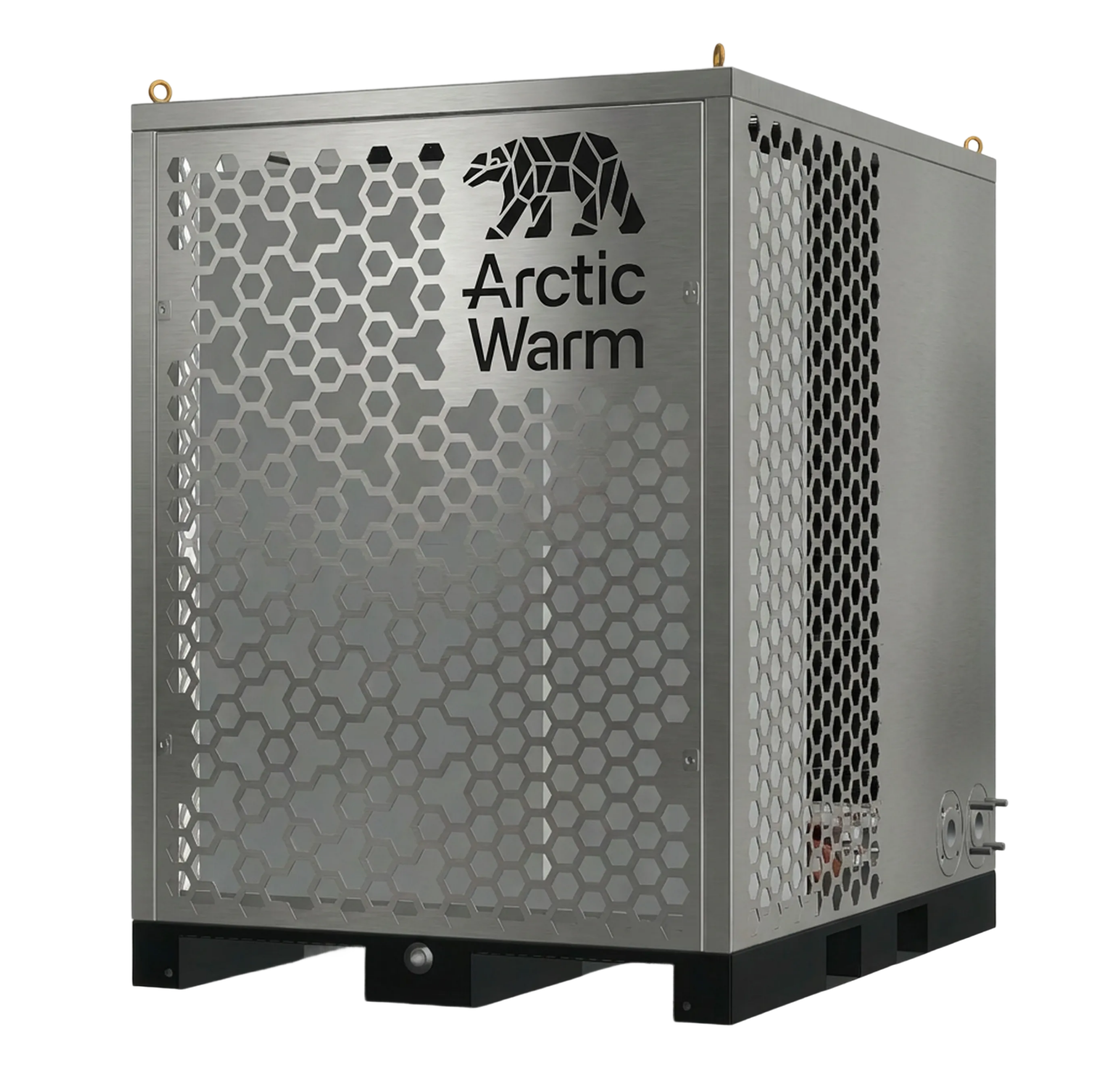
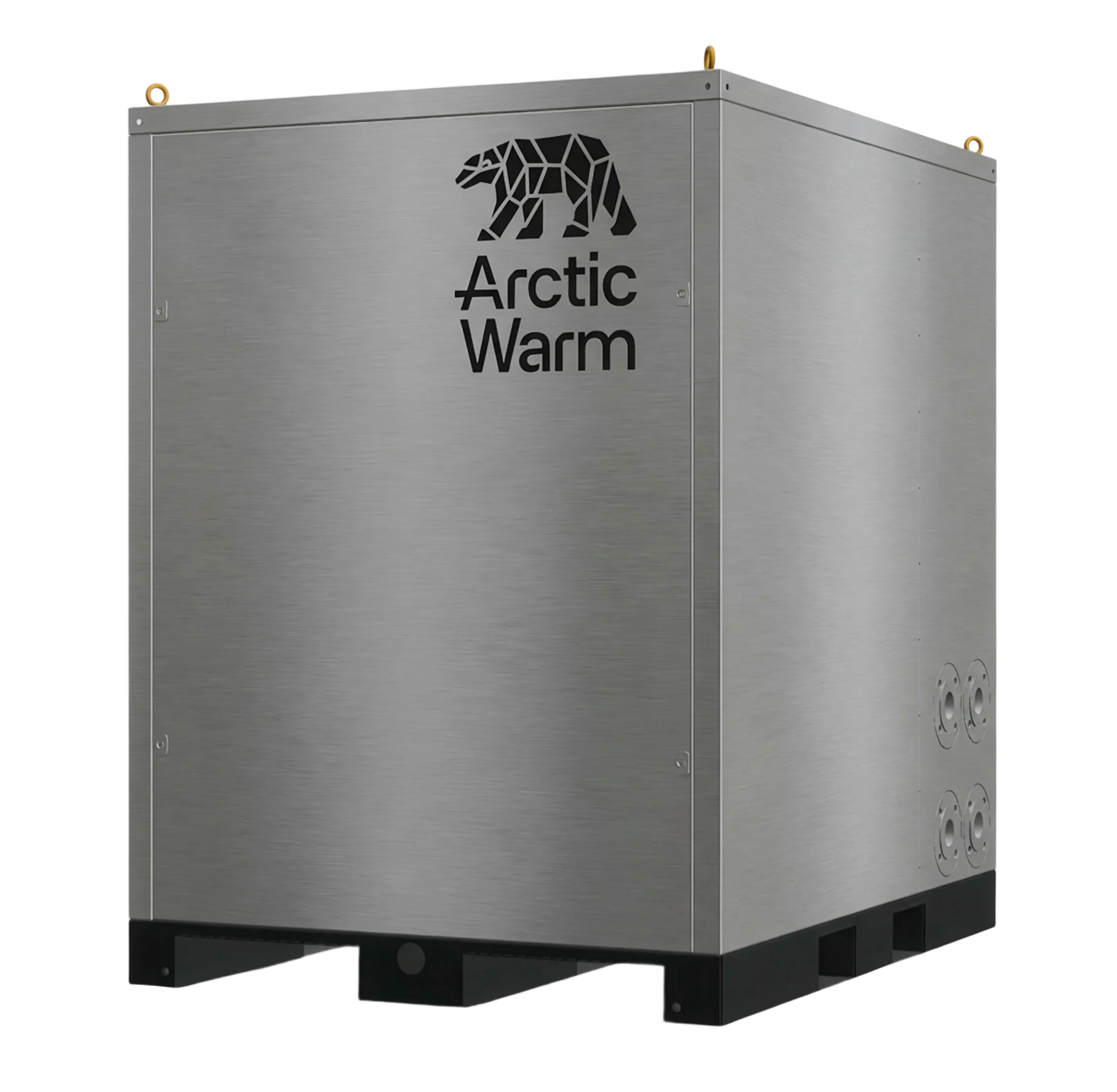
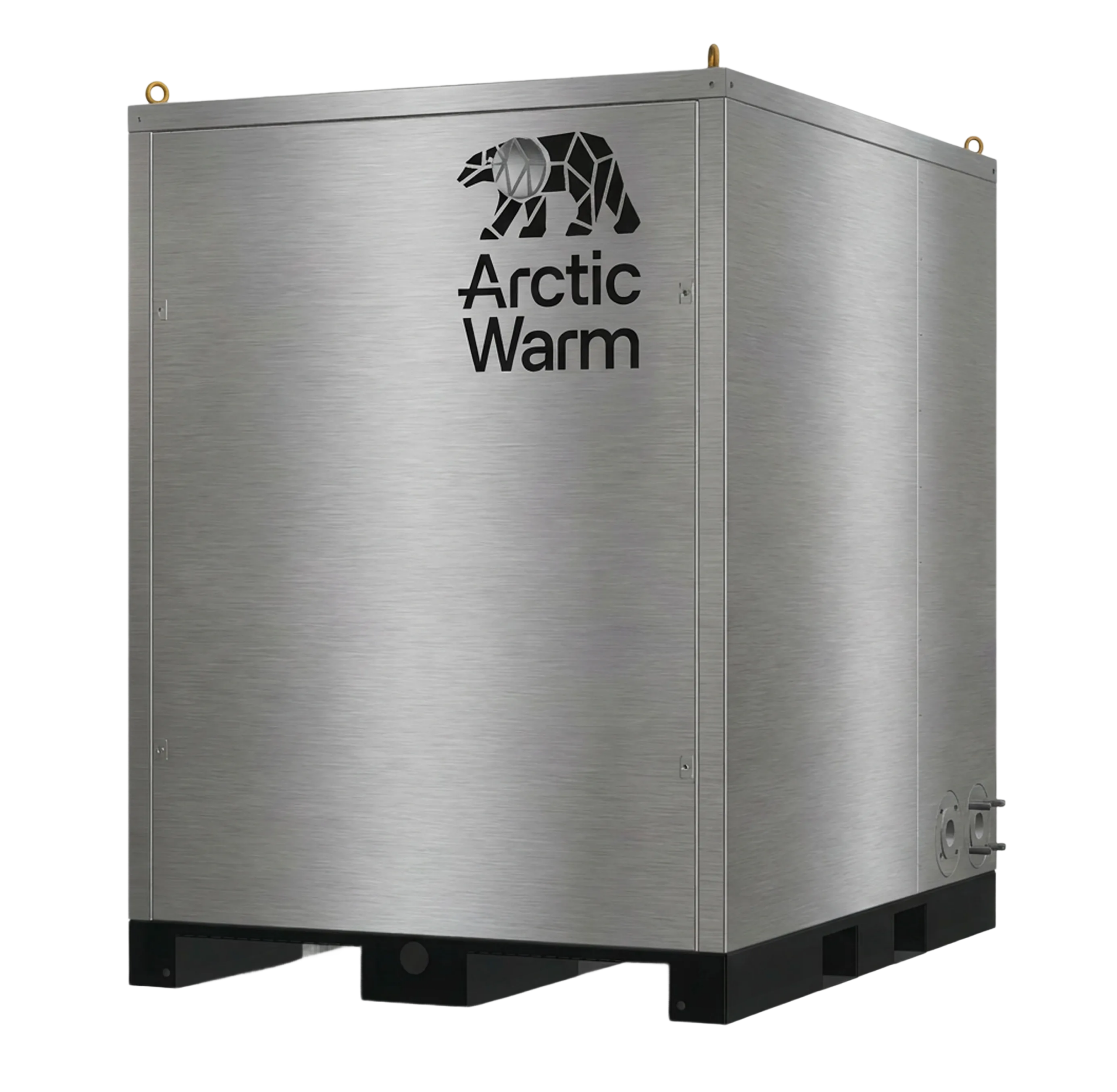
Aurora Block is built from purpose-designed modules, each with a specific role within the overall system. Modules can operate independently or as part of a coordinated network.
Lower emissions are not achieved through compromises. They are a direct result of better control.
By prioritizing low- and zero-emission energy sources and using fossil fuels only when genuinely needed, Arctic Warm reduces unnecessary fuel use, logistics, and on-site handling.
For construction projects, this typically means:
And yes, it usually costs less too – with total project costs often reduced by up to 30% compared to traditional temporary heating solutions.

Arctic Warm systems are used daily on residential, commercial, and infrastructure projects where conditions cannot be left to chance.
Clients who switch to Arctic Warm are rarely, if ever, willing to let go of it after the first project. Once you experience a site where conditions are under total control and automation handles the routines, going back to traditional equipment feels like trading a smartphone for a landline. It’s not just difficult – it feels like an unnecessary risk.
Yes. The system is modular and scales from small sites to large multi-unit installations delivering hundreds of kilowatts.
Absolutely. Units can be added, relocated, or reconfigured as the site evolves. The system architecture is inherently flexible.
In most cases, yes. Oil is used only as a backup or for specific needs such as extreme cold or ground thawing. We have engineered out the need for constant oil consumption.
Deployment is fast and designed for active construction sites. Exact timelines depend on site requirements.
Aurora Block is a hydronic (water-based) system. Heat is distributed either via temporary hoses connected to hydronic fan heaters or by connecting the system directly to the building’s existing hydronic heating network. This ensures consistent, quiet, and energy-efficient heat distribution.
Since the system manages both heating and cooling, we can implement specialized drying programs. By alternating temperatures in rapid, controlled cycles, the system creates a condensation effect that extracts moisture from the air or structures far more effectively than traditional methods.
This can be done via air-to-air fans or through the building's own systems, such as hydronic underfloor heating, to dry concrete in a controlled manner. All condensed water is safely managed and routed out of the building, ensuring moisture is permanently removed from the site.
Arctic Warm provides temporary climate control for construction sites that reduces risk, stabilizes schedules, and makes everyday site management easier.
Stable conditions. Predictable progress. And one less thing to worry about.